- 180DC DTU
- Posts
- DTU to Bain : What It Takes to Crack Top Consulting Roles
DTU to Bain : What It Takes to Crack Top Consulting Roles
Behind the Scenes of Consulting : Part 1
Meet Saksham Bhutani
Currently a Senior Analyst at Bain & Company, Saksham Bhutani is a fellow DTU graduate whose journey into the world of non-tech roles offers invaluable insights for any aspiring engineer. A 2023 graduate in Mechanical Engineering, Saksham explored multiple career avenues working across research, business analytics and consulting roles at places like American Express, EY, Urban Company and a startup called Quinn before landing his role at Bain.
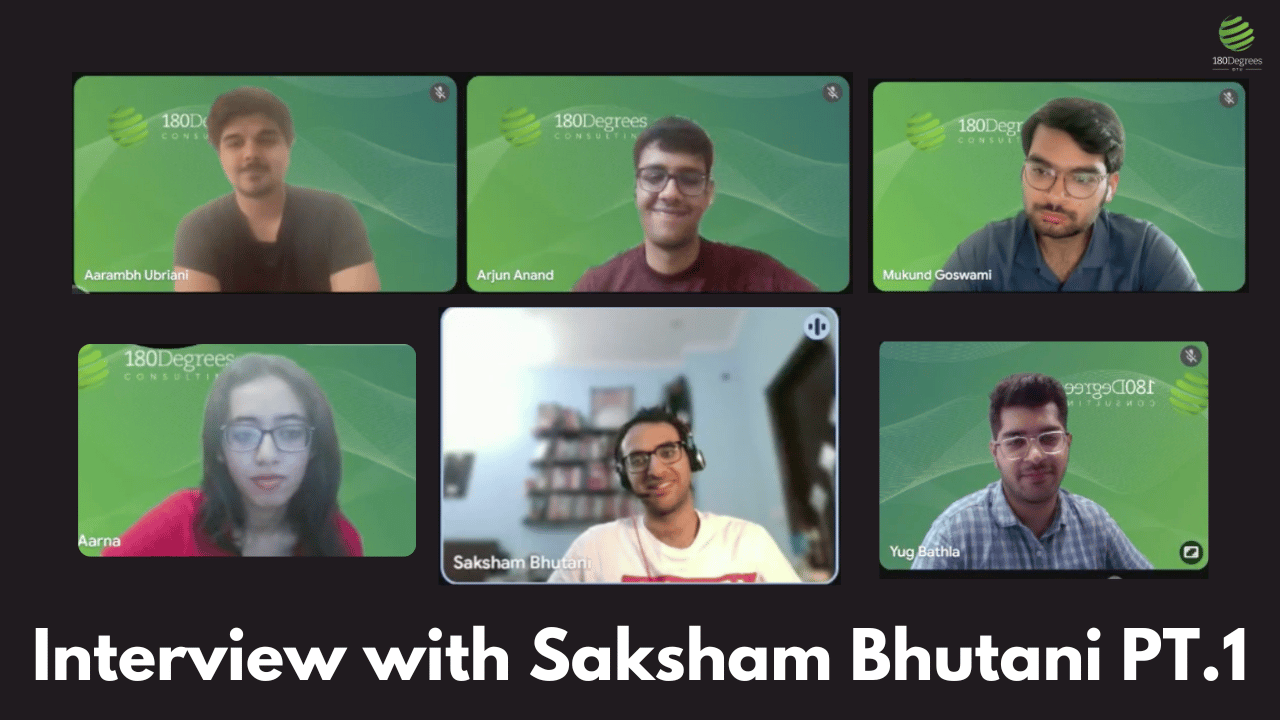
What truly stood out during the interview was how open and relatable Saksham was. Speaking to him felt less like a formal interview and more like a candid conversation between seniors and juniors from the same college. He shared his approach to placement preparation and offered practical advice on navigating non-tech roles, tips that are especially helpful for students who are heading into their fourth year with placement season just around the corner.
Hopefully, you all learn something from his journey and it helps with your own.
Q1) If someone gave you the option to go back and relive your time in DTU, knowing everything you know now, what would you double down on. and what would you avoid?
That's a very interesting question. I think it’s easy to say this in hindsight, but one thing I probably would have done is dedicate more time to building my non-tech profile. It took a while to get there because, in my first and second year, I was still exploring. I tried my hand at coding and considered pursuing my core branch—mechanical engineering.
Like many engineering students, I initially thought, “I’ll take whichever branch I get, learn coding, and apply off-campus in fourth year.” But fortunately, I realised within three to four months that coding wasn’t really for me. In retrospect, I wish I had discovered the non-tech space earlier. I only became aware of it towards the end of my first year. I genuinely didn’t know it even existed before that.
Another thing I would definitely do more of , not just for myself, but also for the people around me, is spread awareness about deferred MBA programs. These allow you to secure a seat at an MBA school during your final year, and then join later after gaining some work experience.

Completed B.TECH in Mechanical Engineering 2019-2023
When I went through the process myself, I wasn’t able to get into any of my preferred schools, but I learned a lot. I realized that students from IITs, SRCC, etc. often get into top MBA schools through deferred MBA programs because they have access to that information early on—sometimes from their first year. They attend webinars hosted by admissions consultants and start curating their profiles accordingly. I only found out about it in my third year, when one of my Enactus seniors got into the Yale Silver Scholars program.
Had I known earlier, I probably would have shaped my profile differently. While awareness has definitely improved now , especially with more DTU students getting into deferred programs. I still think it's an area where increased information could help many students better plan their journey.
Q2)You did internships at IIM Ranchi and IIT Delhi. Were those mainly to expand your knowledge, or were you also trying to build a foundation in analytics with placements in mind?
So, my motive for doing those internships was purely from a profile-building perspective. I did them, I believe, towards the end of my second year. A senior had told me that I needed to start building my profile and begin applying for internships in data analytics or non-tech fields. But the problem was that I wasn’t getting any internships because I didn’t have prior experience, and I didn’t have any experience because I wasn’t getting internships. It was a circular trap.
She suggested that one of the easiest ways to break out of this cycle was to apply for research internships, as they’re more likely to give a chance to someone without much on their resume, apart from maybe some Coursera courses or similar certifications. Of course, it’s still possible to crack startup roles or other opportunities without prior experience, but it’s a bit tougher.
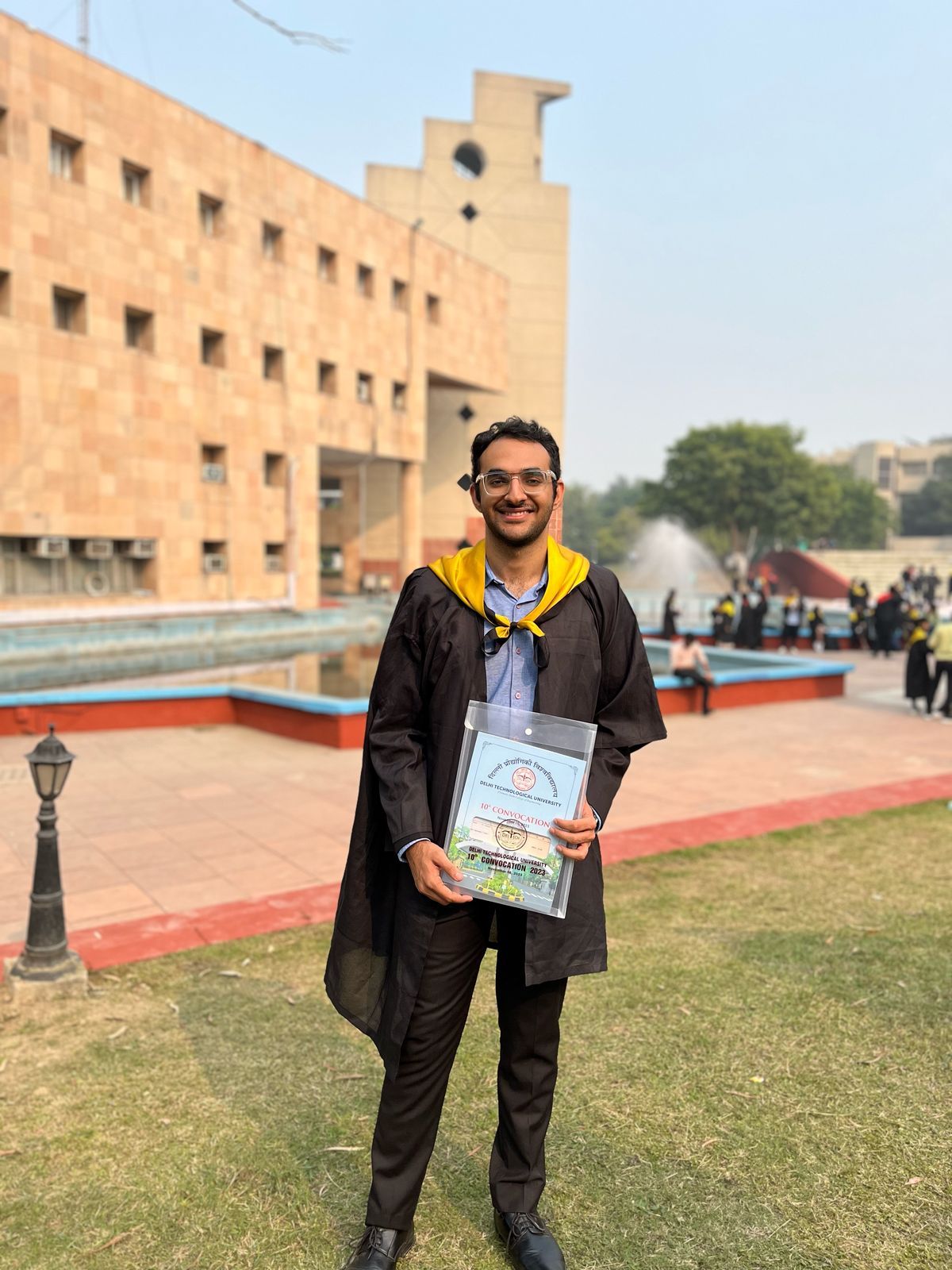
DTU Journey
So that’s why I went ahead with the research internships at IIM Ranchi and IIT Delhi. I was told that this path, while not exactly easy, was relatively more accessible. I remember sending around 200–300 emails over the span of a week and getting only about five replies — three rejections and two acceptances. But even with that, I felt it was a good stepping stone. It helped me get some solid experience and brand names on my resume, which made it easier to apply to other companies later and actually be considered.
Q3) We’d also love to hear about your GMAT journey. We noticed you took the GMAT in your final year and scored a 740, all while preparing for placements. What motivated you to take it during college, and what resources did you use to prepare for both the GMAT and placements?
Ironically, I'm preparing for the GMAT again, because my previous score is about to expire. I can only apply with that score for another year, so if I plan to apply in 2027, I’ll need a new score. I had initially taken the GMAT because I wanted to apply to the ISB YLP program, whose deadline was in August 2022—around the time my fourth year started. So, I began preparing in January of that year.
At the time, classes were still online, and I assumed it would take me two to three months to be done with the prep. But when college reopened in February, I stopped studying altogether. I only resumed after the semester ended—around this time of year (May,2022)—and utilised the summer break to get back into it. Luckily, I cracked Bain during that period. I think Bain came to campus around late July or early August, and the ISB deadline was at the end of August, if I’m not mistaken. Fortunately, I had about a month of dedicated prep time after securing my placement, which really helped.

2nd Runner Up team at the All In Strategy Challenge organized by IIT Delhi
So, while the full timeline stretched from January to the end of August, in reality, it was about two to three months of focused preparation, with four to five months of minimal studying—maybe just glancing at the material occasionally.
As for resources, I was lucky to have guidance from a senior, Aniket Aggarwal, who got into Yale and is now at BCG. He generously shared all the resources he used to score a 740 himself. For each topic—Reading Comprehension, Critical Reasoning, Sentence Correction—he had a set of dedicated books. He spent about 30–45 minutes with me, giving detailed guidance. Back then, the resources included Veritas Prep, a Manhattan book for one of the verbal sections, and of course, the Official Guide—which is always recommended.
That said, with the format now having changed, I’m currently using only the Official Guide and GMAT Club questions. If you’re preparing for the GMAT, I’d definitely recommend being active on GMAT Club. It’s an excellent platform with a vast collection of questions sorted by topic and difficulty. You can practice from easy to medium to hard levels in a very structured way. If you’re able to cover most of what’s on GMAT Club, you should be in a strong position.
Hopefully, I’ll be able to crack the GMAT again and share more tips soon!
Q4) Was there a specific reason you didn’t use your GMAT score during your fourth year? Perhaps your job at Bain or something else?
I applied to ISB and got in, but I decided not to go because I’ve always dreamed of pursuing an MBA abroad. My plan was to apply for a deferred international MBA program, secure admission, then spend two to three years gaining work experience before going abroad. Unfortunately, that plan didn’t pan out.
Right now, since most international MBA programs require at least three to four years of experience, I’m focused on gaining that experience. At the same time, I’m considering taking the GMAT again to improve my score.
Q5) You mentioned that freshers don’t have much on their resumes, mostly just Coursera courses and similar certifications. So, what’s your opinion on certifications like Excel, SQL, or consulting masterclasses? Are they worth it for undergraduates targeting non-tech placements?
It's good if you're actually getting something out of it, but I believe it doesn’t really add much to your resume otherwise. This is something a senior once told me, and I think it’s a very fair point. Nowadays, you can complete a Coursera course in a day by just looking up the answers online, and then put up 100 certifications on your LinkedIn or resume. But the truth is, you might not actually know any of it. That definitely affects the credibility of platforms like Coursera, Udemy, and similar ones.

DTU Journey
I think the best way to add credibility to your resume for a particular skill is to have a project that demonstrates it. For example, if I say I know Excel and Tableau, can I show a project that proves it? I like F1, so I took a dataset from Kaggle, analyzed it in Excel, found some insights, and created a dashboard in Tableau with six or seven different charts. If I put a link to that project on my resume and explain it in a line or two, I believe that would tell a recruiter much more about my Excel and Tableau skills than just listing a course—because they know those courses can’t always be fully trusted.
Q. Just to build on that—if someone can fake answers in an interview, what’s stopping them from faking projects too? Like, say, taking something off GitHub and putting it on their profile as if they built it themselves. Isn’t that essentially the same thing?
A. Yeah, I mean, technically you can. You can go on YouTube, search for “Excel projects,” and find hundreds of them. But in doing that, you’re really just sabotaging yourself. Sure, there’s a limit to how much recruiters can verify, but in the long run, you’re the one who loses.There’s no perfect way for anyone to accurately judge your skills—take coding interviews, for instance. There are even companies now that help candidates cheat during interviews, without the interviewer even realizing. And they’re advertising themselves proudly on Twitter and LinkedIn. So yes, you can definitely trick your way into a job, but once you’re in, you have to perform. That’s where reality hits—you’ll either have the skills or you won’t.
And honestly, if you're working in a space you genuinely enjoy, you won’t want to fake it. I know that sounds a bit idealistic, but for example, I genuinely enjoy Excel more than coding. Like I mentioned earlier—the F1 and IPL examples.Just the other day, I was thinking about how high the IPL scores have been this season and last. That got me wondering—can I find a dataset that tracks average scores over the years, from when IPL started in 2008 to now? Has the average changed significantly, and if so, why?That’s a project that excites me. I’m not forcing it, not faking it. It combines things I find interesting: IPL and data analysis. And when you’re working at the intersection of things you enjoy, the motivation is natural. You don’t need to fake a certification or a project.
Of course, certifications are still valuable. I’ve done my fair share—mainly to learn something new. And yes, the badge you get for LinkedIn or your résumé is a nice bonus, but that shouldn’t be your primary goal. The learning itself should matter more.
Q. Earlier, we touched upon how some companies or individuals are beginning to use AI tools. We’re now at a point where AI can assist with almost every aspect of a task. So I’d love to understand from your perspective: how has AI influenced your approach to problem-solving, both at Bain and in your personal life? And more broadly, how do you see AI shaping the future of consulting?
A. That’s a great question. I do believe AI is fundamentally changing how we work. Now, I’m definitely not the most qualified person to speak on this at a technical level, but based on my experience, I can say that AI—particularly tools like ChatGPT—has become a daily companion in my workflow.
Personally, I use ChatGPT for a wide range of tasks. It may not always produce perfect results, but it’s extremely helpful for writing, ideation, and forming structured thoughts. For instance, when I have a vague idea or a thought I want to explore, I often use ChatGPT as a sounding board. It helps me frame my thinking better and sometimes even introduces perspectives I hadn’t considered—of course, depending on how well I prompt it.
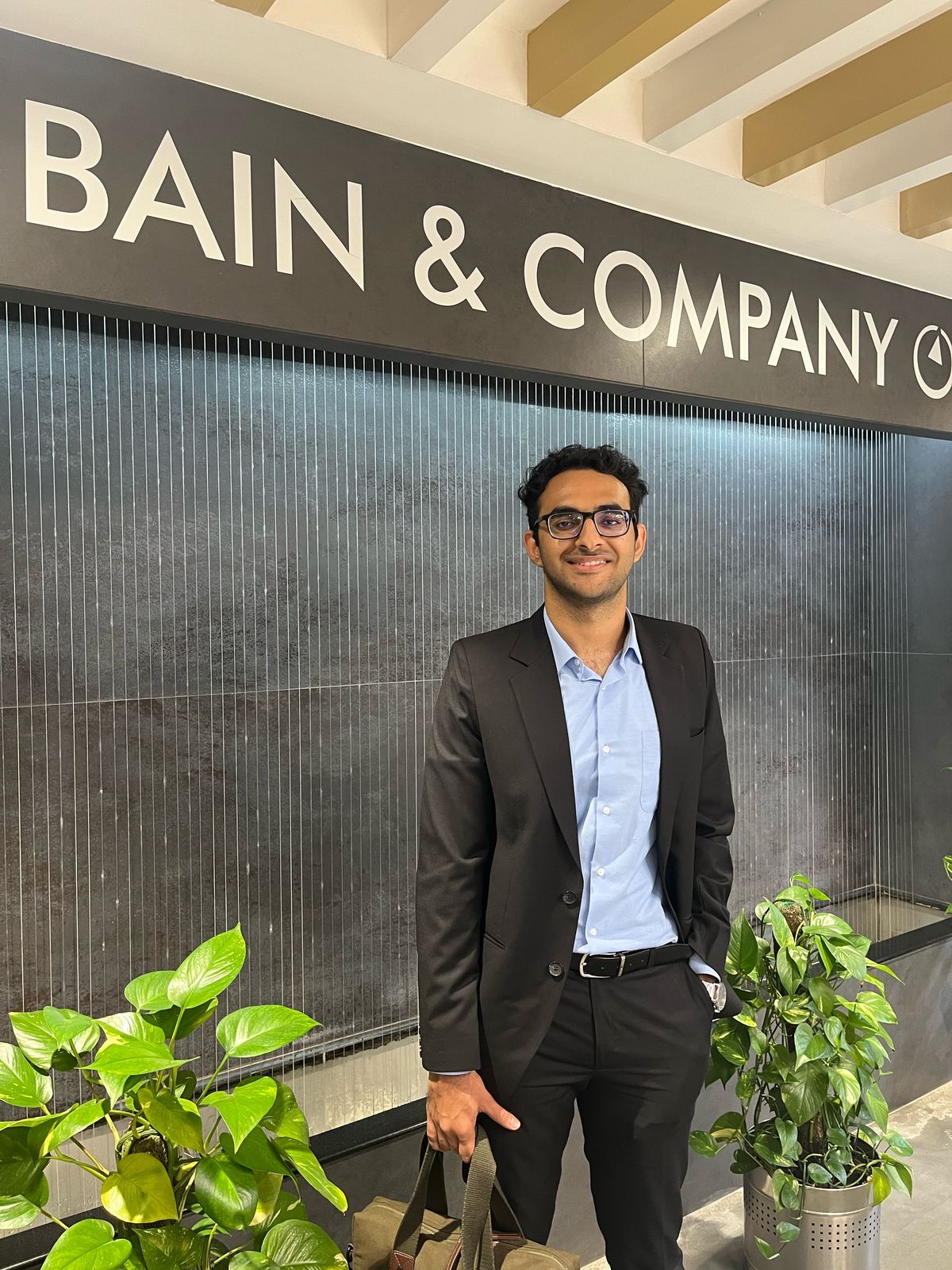
Analyst At Bain & Company
At Bain, we use AI tools quite extensively as well. In fact, Bain has a partnership with OpenAI, so we have access to advanced versions like GPT-4 for everyday work. Of course, we don’t input confidential client data, but it’s incredibly useful for things like writing complex Excel formulas, drafting emails, conducting secondary research, or even organizing information quickly.
Honestly, I can’t imagine how we used to get through these tasks before tools like ChatGPT existed. That said, AI isn’t at a stage—yet—where it completely replaces human expertise. For now, it’s great at getting you 70-80% of the way there, but that remaining 20% still requires critical thinking, domain knowledge, and human judgment.
WRITERS
 Arjun Anand |  Aarambh Ubriani |  Aarna Saluja |
 Mukund Goswami |  Yug Bathla |